

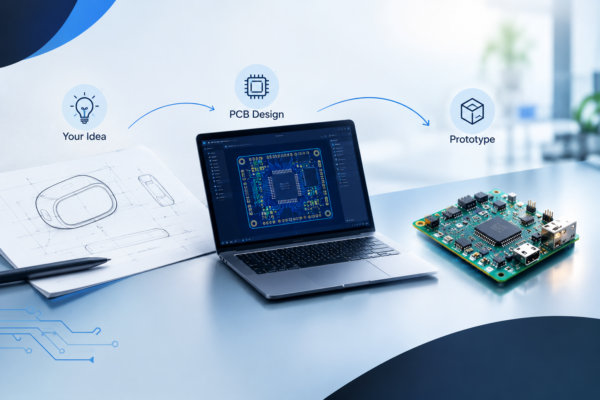
For startups creating devices, connected products, or new electronics, making a working prototype is a key step. Many successful hardware products rely on a printed circuit board. The PCB connects parts. Helps the product work as planned. A good PCB makes the product more reliable, saves power, allows communication, and helps with future upgrades.
However, designing a PCB is not about putting parts on a board. Startups must think about product needs, part choice, circuit work, board shape, testing, price, and manufacturing from day one. This is where Custom PCB Design Services for Startups helps turn an idea into a real, testable item. Custom PCB Design Services for Startups cuts costs.
Avantari Technologies combines hardware engineering, PCB skills, embedded software, and product development to help businesses turn an idea into a working prototype and a design ready for production today, quickly.
Why PCB Design Matters for Startups
A printed circuit board forms the base of electronic devices. It links parts like microcontrollers, sensors, processors, memory, power circuits, and communication modules with paths in every device. For a startup, early PCB choices impact product size, performance, reliability, battery life, and cost. A lab design may need changes to work well in real life.
Using Custom PCB Design Services helps startups make decisions by focusing on real product needs. Instead of messy development boards and wires, they build a design that fits the actual requirements from the start.
This approach is very useful for products that use connectivity, artificial intelligence, wearables, and medical electronics. It helps products stay small, save power, keep signals clear, and stay reliable in settings. These products excel, enhancing performance and reducing cost.
Start with Clear Product Requirements
Before starting a PCB layout, the development team must first understand what the product must do.
Important questions include:
- What functions will the device perform?
- Which sensors, processors, and communication modules are required?
- Does the product need Wi-Fi, Bluetooth, or another connectivity option?
- What are the size and enclosure constraints?
- Will it operate using a battery or an external power source?
- What environmental conditions must it handle?
- What is the expected manufacturing cost?
These questions help define the board’s architecture and prevent unnecessary design changes later.
Avantari Technologies uses a product‑focused approach to hardware engineering, linking design to functionality, usability, and manufacturing. This approach ensures PCB choices support the product, not just a single technical need, supporting future growth and innovation.
From Circuit Design to PCB Layout
Once the requirements are understood, the next step is translating them into an electronic design. Circuit design defines how components connect and interact. PCB layout then determines where components sit on the board and how electrical signals travel between them.
A good layout needs to focus on where parts go and how they connect. It also needs grounding and power flow. The board’s size matters too. Complicated designs must handle fast signals, interference, heat, and many layers. All of these are important for a design.
For startups, Custom PCB Design Services help balance needs with budget, component availability, and enclosure size. These services offer engineering support to create cost-effective circuit boards that meet real-world constraints.
Avantari’s hardware offers speed and multilayer PCB design. It is used for AI, IoT, medical electronics, and defense. The approach focuses on integrity, thermal stability, and battery needs.
Designing for Power Efficiency and Reliability
Power management is very important for portable products. A wearable sensor node or a battery-powered IoT device must work well without losing features. Poor power design leads to reduced battery life, resets, overheating, and unstable performance. Bad components or weak signal paths also hurt device reliability.
Designing a PCB thoughtfully means checking voltage needs, current usage, power control, component limits, heat management, and carefully observing how the device behaves under operating states during different conditions.
Startups can avoid redesigns by tackling these factors early. Custom PCB Design Services for Startups must offer more than board layout. Custom PCB Design Services for Startups should also help engineers decide how to improve overall product performance.
Connecting PCB Design with Embedded Software
A circuit board gives electronics a base. Embedded software makes the device work as it should. Firmware can control sensors, handle inputs, manage connections, and talk to systems. In products, the board can also run algorithms or AI features.
PCB design and embedded software must work together, not separately. The processor, memory, interfaces, and other components must all support the software requirements to ensure operation and performance levels.
Avantari Technologies brings together hardware knowledge and embedded software. They also handle firmware, algorithm design, and system integration. This connected approach helps startups create electronics that work with software and intelligence. The final product will be smart and functional.
Why Prototyping Is an Essential Step
A PCB prototype allows a startup to test its design before deciding on production quantities. During prototype testing, engineers can verify if components work as expected, if signals remain stable, if power consumption matches requirements, and if the board fits inside the product enclosure for the product release.
Testing can uncover issues that aren’t clear from design files, like component conflicts, heat problems, connection flaws, or space limits. The development team adjusts the design. Tests the new version to fix these problems.
Custom PCB Design Services help startups turn prototyping into a learning phase, not just a board creation step. By spotting risks and sharpening product features, these services let startups make smarter choices before advancing efficiently and ahead of the competition today.
Designing with Manufacturing in Mind
A working prototype is not automatically ready for production. The design must also be easy to assemble, check, make, and fix. It needs to fit the planned cost and quality standards.
This is where design for manufacturing and design for assembly become important. These practices look at component availability, spacing, assembly methods, board dimensions and production constraints. They help make sure products are easy to build and cost-effective. Good design makes everything better.
Avantari Technologies lists CAD, DFM/DFA, 3D rendering, and simulations as parts of its hardware design method. This helps build sturdy prototypes. For ventures thinking about production early cuts needless changes and maps a clearer route from prototype to final product and ensures smoother scaling, for customers.
How to Choose the Right PCB Development Partner
Not every PCB design provider offers the level of support. Some focus on board layout while others help with full product engineering. Startups should assess capabilities, experience, communication, and reliability before choosing a partner:
Technical experience: When hiring, search for hands‑on experience with IoT, wearables, connected devices, or AI‑enabled electronics. Look for real‑world projects that demonstrate depth in these areas. Seek evidence of troubleshooting and iteration.
End-to-end understanding: It means the team must know the process, from circuit design and PCB layout to embedded systems, prototyping, and how manufacturing limits affect the design, for product success.
Communication: Communication must be clear at every stage. Requirements, design choices, risks, and revisions should be explained fully and consistently to avoid confusion and ensure everyone is on the same page.
Testing and iteration: Prototypes are tested through user feedback and real-world simulations. The team reviews issues found during validation, then makes changes and retests to improve the design.
Scalability: Scalability means the design should grow easily as the product adds features or increases in production size. Think about changes early.
The value of Custom PCB Design Services for Startups lies in finding a partner who can help solve the product’s engineering challenges, not just deliver a board layout.
How Avantari Technologies Supports Hardware Innovation
Hardware startups often need disciplines to work together. PCB design influences component selection. Firmware affects circuit requirements. Enclosure design can affect board dimensions and thermal performance in every project today.
Avantari Technologies builds products by linking hardware with software and engineering skills. They produce items like Neo-1, a wearable that uses AI Dhyana rings, and Ein, a smartwatch that tracks health data and can call for help in emergencies. These projects show how well Avantari Technologies integrates electronics and software to create devices for everyday life, bringing peace.
For startups, thinking beyond the PCB helps build better products. It connects the circuit board to how users interact with the device. This wider engineering view supports the technical design. It ensures the board fits into the product system. It makes the product more functional and easier to use. This approach helps startups create more integrated solutions.
Conclusion
Turning an electronics idea into a successful product requires careful planning, engineering, testing, and iteration. PCB design is one of the most important steps because it influences how the product performs, how efficiently it uses power, and how easily it can be manufactured.
Custom PCB Design Services for Startups help founders move from concepts to functional prototypes. Custom PCB Design Services for Startups also deal with details and practical limits.
Avantari Technologies combines PCB knowledge with embedded software, precise design, prototyping, and system integration. This helps startups make devices, IoT products, or wearables. They build a base so ideas can grow into real, ready-to-launch products. The focus is on hardware that works well and can keep improving.